
Forced Adoption — Who Cares?
Removed from my mother’s side and left with foster parents until I was adopted at six months old

I am writing to tell you before you go ahead with any adoption plans. I am sorry my daughter is not to be adopted. It’s one month now, and I can’t do without her.
Excerpt from a letter my birth mother sent to the authorities.
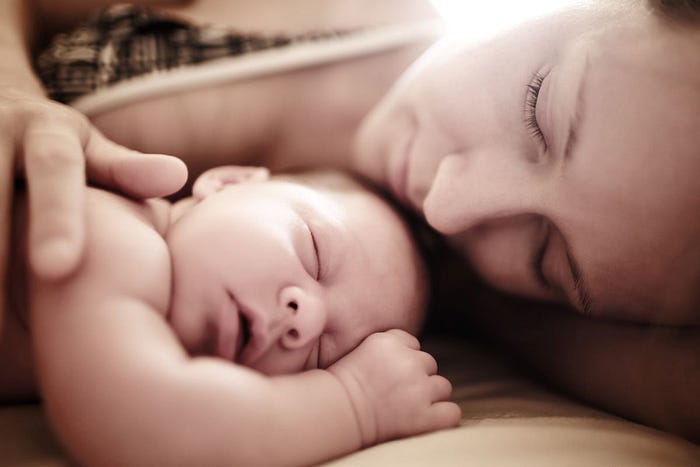
The above quote is a snippet from a letter my birth mother (aged 18) wrote in the late 60s in a futile attempt to stop her baby — ME — from forcibly being taken from her. Yet, despite the adamant tone in those words, I was removed from her care after spending four weeks by her side, and left with various foster parents until I was adopted when I was six months old.
Subsequent correspondence shows how nuns from the Catholic order of the Sisters of Nazareth,¹ repeatedly claimed she would not make a capable mother and I would be better cared for elsewhere.
I have read many horrific cases about mothers who were at Nazareth house in Southampton, as my own birth mum had been. One young woman wrote about how she was informed her baby would be put up for adoption, there was no choice but to flee. After being threatened at the unit, she literally went on the run. Thankfully, kind people in the area took her in and offered assistance, and she managed to keep her baby.²
In the 1960s there was a stigma associated with unmarried mothers. Indeed, getting pregnant out of wedlock was considered a dreadful, shameful mistake. As well as incredibly irresponsible. It was common for these women to be pressured or coerced into giving up their babies. They were not allowed a chance to mother their own child.
Just imagine that for a moment…
The authorities took control and all concerned were told the best thing for everyone would be adoption. In the name of Christianity!
What kind of god would steal a child from their mother’s love without her consent?
I have been in possession of my birth mum’s letters since I contacted the society who dealt with the adoption when I was in my mid 20s. However, even after reading them several times, I couldn’t face up to the harsh, cruel fact: I had been stolen from my mother.
Nevertheless, those letters helped me get past previous feelings of abandonment, as they clearly showed my mum wanted me with her. So when I found out the contact details for my birth family, I was reasonably confident they would welcome me because I’d read her words.
And they did…
When I finally met with my real mum, I learned that after they had totally disregarded her wishes to keep me, she understandably suffered a nervous breakdown. Yet still I didn’t put our situation in the category I had read so much about in the press — forced adoption. But that is precisely what it was.
I am not sure why I was in denial for so long. Perhaps it was due to the fact meeting my birth family was traumatic enough, and so I couldn’t delve any deeper into why I had been disallowed the chance to be a big sister to my siblings. Growing up with my flesh and blood had been vetoed the moment I’d been wrenched from my mother’s arms.
Although I loved and admired my adopted mum greatly, when I eventually got the chance to spend time with my birth family, I knew even with all the hardship they went through, I would have wanted to be with them. Part of the family rather than the baby who was taken at birth.
Over the years a glare of publicity has been brightly shone on the Irish mother-and-baby units and laundries, but as we know, this fiasco had also been widespread across the United Kingdom for decades.
Recently, the government received a request from the Joint Committee on Human Rights — to issue a formal apology to unmarried mothers who had their babies taken for adoption from the late 40s to the mid 70s.³
In England and Wales between 1949 and 1976 an estimated 185,000 children were seized from unmarried mothers, who had not agreed to let them go.⁴
Let me just repeat that… Over the course of 27 years, about 185,000 children were removed from their mothers’ care without consent. This amounts to approximately 132 babies a week, nearly 19 per day!
However, rather than apologise, the UK government shrewdly admitted what had happened was — profoundly wrong.
As of July 2023, the Irish, Scottish and Welsh counterparts have said they are truly sorry for what went on, yet still the UK powers drag their heels over doing the same.⁴ (Latest update at end of post)
Although I understand saying sorry can not change the past, I believe by doing so it could comfort those who have suffered in this debacle. If the government takes responsibility for the pain and heartache, this in itself would be some kind of insurance that they have recognised the hardship and suffering these women endured seriously. Implicit would be an assurance that in future no other families will have to experience a similar trauma.
I personally feel an apology is warranted not only for the mums who have been, or will most likely be, scarred for life — but also for the children like me, who were denied a chance to know our real families. I have grown up with a disconnected core; I easily detach from people and situations and am mistrusting of most relationships, except those I have with my two daughters.
At this point, although many may hold god accountable for what went on, he is out of our reach. So, what say you government? It’s time you stood up and took ownership for your part in the shameful forced adoption practice… So all those effected can at long last close this dreadful page in our country’s history.
I hope you understand, nothing can change my mind. I want my daughter with me. That is my final decision.
Excerpt from a letter my birth mother sent to the authorities.
Update
As of NOW - mid-May 2026, the UK government — which would issue any formal apology on behalf of England — says it’s considering the case. They only recently acknowledged the state’s direct role in these practices, in March 2026. A full response regarding the next steps towards a possible apology is expected by the end of May 2026.
References
(1) “Nazareth House, Hill Lane” — http://sotonopedia.wikidot.com/page-browse:nazareth-house-hill-lane
(2) “Nazareth House; Mother and Baby Units in the 1960s and 1970s” — https://www.lisacherry.co.uk/nazareth-house-adoption/
(3) “Government responds to JCHR call for adoption apology” — https://committees.parliament.uk/committee/93/human-rights-joint-committee/news/186498/government-responds-to-jchr-call-for-adoption-apology/
(4) “Forced adoptions: why government won’t apologise” — https://www.theweek.co.uk/news/uk-news/961569/forced-adoptions-why-government-wont-apologise
Support my work?
Not a Paid Subscriber but want to support my work and read all my stories?
Then click here to find out more.
Or …
More stories about me and my birth family:
Maybe Tomorrow

Clarification — In this personal essay, I talk about my Mum; the woman who brought me up. And my birth-mum; the woman who physically gave birth to me.

May, even though I know your story and will never forget it, my heart breaks every time I read something about it. What those people did, taking you from your mother while she explicitly said she wanted you with her, is horrible. I hope the UK government will at least offer apologies for their actions. Even though that will not erase your history, it will definitely be and mean something.
I never can understand the physical and mental pain and devastation the humans (and groups of them) can inflict upon others. Religions and other cultures feel they “know best” what they are doing and it destroys people. I am always sad and sorry to hear of your life and you get some resolution to help you. Sorry doesn’t help but it is a small acknowledgment. Hopefully you can better. 💛