
Inheritance
Choosing peace and truth

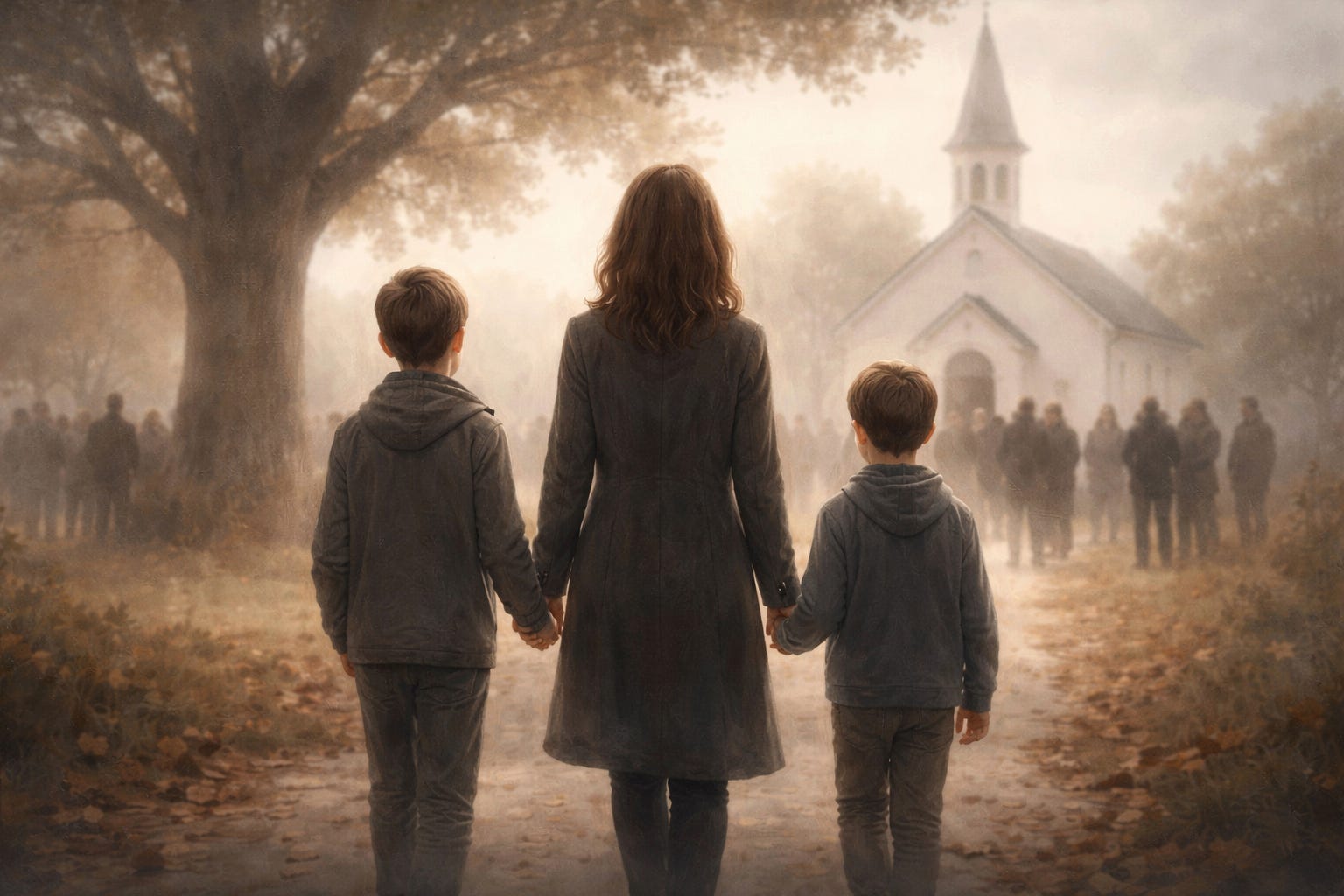
We buried my uncle today.
The sky was grey, and it was raining softly, as if the day itself felt heavy with loss.
As my husband, my sons, and I walked toward the church, I felt how funerals slow everything down. They make you think about the people who came before you and the life they lived. You feel the connection between generations more strongly — grandparents, parents, children — all part of the same story. In moments like that, you realize how deeply you belong to something bigger than yourself.
It was also the first time in almost four years that I would see my brother. When my mother told him about the funeral, the first thing he asked her was whether I would be there.
Of course I would be there.
Not for him. But for the man we were saying goodbye to. For my aunt, who had lost the husband she had been married to for forty years. For my cousins, who had lost their father. For his grandsons, who had lost their grandfather. For love. For inheritance.
Inheritance is not only what is written in wills. It is what you see in life. What you learn as a child. What guides you, even before you know it.
I have lived through things that could have broken me. Trauma that could have made me turn inward, become hard, or distrustful of the world. The way I carry those experiences — the way I chose not to let them define me — comes from my mother.
She taught me to be strong without being bitter. She taught me dignity without cruelty. She taught me that pain does not give you the right to hurt others. I learned resilience by watching her stand up again and again. By watching her stay kind when it would have been easier to become cold. The way I live my life is inherited.
My brother had the same mother. The same home. The same lessons were there for him. But inheritance is not only what you are given — it is also what you take in.
Some people carry their wounds as parts of their story. Others make their identity from their wounds. When victimhood is something you experience, it can be healed. But when victimhood becomes your identity, it becomes dangerous.
If “I am the one bad things happen to” becomes the core of who you are, then the world must always agree with it. When someone disagrees with you, it does not just feel like a different opinion — it feels like proof that you are being treated unfairly again. When someone sets a boundary, it does not feel healthy or normal — it feels like rejection or punishment. And when someone nearby is strong, stable, or moving forward in life, it can feel threatening, as if their strength somehow takes something away from you or exposes what you are not facing.
Sometimes the mind adjusts reality to protect that story. If a memory does not fit the belief of being the victim, it can slowly change. Details can become unclear, and pieces of the past can get mixed up. This is not always done on purpose or with the intention to hurt anyone. But even without that intention, the damage it causes can be very real.
I have felt what that costs. There is a special kind of shock when your own trauma is spoken back to you as blame. When you are called the offender so someone else can stay the victim. It is more than just conflict — it attacks reality itself.
Maybe I became a mirror he could not face. I did not stay broken. I did not stay small. I refused to let my pain define my whole life. A mirror does not hurt anyone — it simply shows what is there. But seeing that reflection can feel overwhelming. It can feel exposing, uncomfortable, even threatening. Especially for someone who is stuck.
And that is the word: stuck. He is stuck in the role of the victim. I think it has become such a big part of him that he does not know who he would be without it. Leaving that role would mean losing the only part of himself that feels safe.
When I saw him today, after all those years without contact, I said hello. My husband shook his hand and offered condolences. We were in the same place at the same time, but it did not feel like we were brother and sister. He felt more like a stranger than family. We were not there to rebuild anything; we were just two adults standing in the same place, separated by what had happened. I cannot control how he thinks about me or what he believes is his truth. Today made that very clear.
Today was also my sons’ first funeral. They walked beside us quietly. They shook hands with relatives. They gave hugs. They listened carefully to the memories that were shared. They stood still and took in the heaviness of saying goodbye. It was emotional for them — I could see it in their faces. I saw the tears in my oldest son’s eyes, my thoughtful, sensitive boy. When those tears finally fell, my heart broke.
Not from sadness alone — from pride.
He wasn’t hiding. He wasn’t trying to make himself look strong. He was allowing himself to feel grief fully, openly, and honestly. Both of my boys were doing the same. They were respectful. They were gentle. They were present. My youngest, only eleven years old, even asked the grieving family members of my uncle if they were okay — without anyone telling him to do so. His concern came from his own heart. In that moment, I understood something deeply: this is inheritance too.
They are learning that being strong does not mean being hard. They are learning that love is showing up, even when it is difficult. They are learning that feeling for others, and sharing empathy, is not a weakness.
They are watching me — how I stand, how I show up with love even when it is hard, how I hold boundaries without being cruel, and how I refuse to take part in lies while still remaining respectful.
I cannot choose what my brother carries forward, nor can I untangle what he has made part of his identity. I cannot save someone who does not want to leave the role they believe defines them.
But I can choose what I pass on. I can show my children what it means to be true to yourself. I can show them how to be strong without being bitter. I can show them the freedom to feel.
And I allow myself something else, too. I have the right to step away from someone who denies my reality. I have the right to protect my peace. I have the right to let go of guilt for a burden that was never mine.
That, too, is inheritance. And this time, I choose it consciously.
Also read this powerful essay by Marie A. Rebelle
The Quiet Power of Choice

I live in a free world where I’m allowed to choose how I live, who I am, what I do, what I say, and of course, all of that within the bounds of the law. With me, millions…
I am so proud of you, of your boys, of how you are raising them, the love they experience, the beautiful things they take from you. You can indeed choose what you pass on, choose what and who you allow in your life, and choose for your own peace of mind. Love you! 🤍
It must have been a strange day for you all round - four years is a long time and at an event which has so many other emotions running along with it. I must say I understand why you are so proud of your sons. They behaved wonderfully - it is so important for boys to know that crying or showing your feelings is a strength <3